[podcast] Studying Simulated Stardust

Header graphic

Click to listen! (10MB MP3, right-click to save)
Transcript (Text, PDF)

Dust – on Earth, it’s a nuisance. But in space, it’s a valuable natural resource, a raw material essential to the formation of nearly any object imaginable. NASA Postdoctoral Fellow Dr. Christina Richey studies interstellar dust grains through laboratory-created analogs, comparing the properties of simulated stardust to data from missions like SOFIA, Spitzer, and Herschel. This hands-on approach gives Christina and other researchers unique insight into the building blocks of stars, planets, and even life. This research complements observational data, computer simulations, and other studies of how objects form and work in space. In this interview, Blueshift spoke to Christina about her research as well as her adventures outside the lab, looking for life in exceptionally hostile environments.

Christina Richey
Credit: Christina Richey

Read more »

[Sara's blog] Awww! Cosmic baby pictures!

Infant Stars Peek Out from Dusty Cradles
Protostars in Messier 78, as seen by multiple observatories
Credit: NASA/ESA/ESO/JPL-Caltech/Max-Planck

The side-by-side images above depict protostars found in Messier 78, a reflection nebula found within the constellation Orion (but not the Orion Nebula, which is Messier 42). These are some of the youngest stars that astronomers have ever seen – some of them are still embedded deeply in a gaseous envelope, which would suggest that they’re under 25,000 years old. That may seem like a long time compared to our human lives… but for stars that can live for millions or billions of years, it’s still stellar infancy. These images accompanied this press release from the Herschel space observatory, and represent observations from Herschel as well as ground-based telescopes. Though they can be difficult to detect, researchers are hoping to document more young stars in various stages of life – from before birth through infancy – to learn more about the early development of stars.

NASA often looks at “young” astronomical objects, to learn more about the formation and evolution of the Universe. Here’s a selection of some beautiful and interesting cosmic baby pictures…
Read more »

[Sara's blog] A Blast from the Past

The past few weeks have seen the release of several fantastic space-themed videos. You may have seen them as they made the rounds on Twitter or Tumblr, but I wanted to take a moment to highlight three that take a nostalgic look back at NASA’s missions and personnel in the 1970s and 1980s.

We’ll start with this TED-Ed animated video narrated by Astronaut Jerry Carr, commander of Skylab 4 (the final mission to Skylab) from November 16, 1973 to February 8, 1974. In this video, he talks about his time with NASA, which didn’t take him directly from basic training to a flight crew – in fact, he spent several years shadowing and supporting Apollo operations while he waited for a chance to go into orbit. I especially enjoyed his stories about working on Apollo 8 and 12, each of which definitely had some stressful moments but ended up as highly successful milestones in NASA history.
Read more »

[Sara's blog] Go, Super-TIGER, go!

Members of the Super-TIGER team in Antarctica
Super-TIGER team members in Antarctica:
John E Ward (WUSTL), Ryan Murphy (WUSTL), Thomas Hams (GSFC), Sean Fitzsimmons (GSFC)
Credit: NASA/WUSTL

We’ve talked about NASA’s scientific balloon projects in the past, even featuring them in a two-part podcast series about balloon-borne science in Antarctica and what it’s like to live and work on the ice. Scientific balloons are an alternative to satellites for some NASA projects – they cost less, are easier to launch, and often allow researchers to recover their hardware for future refinement and re-flight.

The Super-TIGER (Super Trans-Iron Galactic Element Recorder) balloon-borne experiment is currently flying over a hundred thousand feet above Antarctica, circling the South Pole for the third time since its launch on December 9, 2012. The project is a NASA-funded collaboration with researchers at Washington University in St. Louis, Goddard Space Flight Center, California Institute of Technology, Jet Propulsion Lab, and the University of Minnesota. The scientific instruments on Super-TIGER are collecting cosmic rays, in hopes of better understanding their origins.

When Super-TIGER launched, its team planned for the balloon to make at least two full loops around the pole. When it completed that, they decided… let’s keep going! And soon after their third loop began, they set a new flight duration record for scientific ballooning.
Read more »

[Try It At Home] Turning Sound Into Light

This is a long-overdue follow-up to the blog where we showed you how to eavesdrop on the signals coming from your remote control, turning the infrared light patterns into sound through a simple circuit with a photocell and an amplifier/speaker. In this Try It At Home activity, we’ll build another circuit – and this one will turn your favorite songs into pulses of light to be received by the first circuit. Put the two circuits together and, well… we’ll show you what happens at the end of this entry!

Here’s the set-up:

Sound into Light #1

This circuit has a few more pieces than the last one, but again, these are items that you should be able to pick up from an electronics or computer supplier:
- An infrared LED
- A 0.22 μF (that’s a microfarad) capacitor
- An AA battery in an AA battery holder
- An audio cable with a 1/8″ plug on one end and two wire leads on the other
- Five test leads with jumper clips on each end
- An audio source

We’ll take you step-by-step through building this circuit. It looks more complicated than it actually is, mostly due to all of the long wires between parts! Building these circuits is really a breeze, you just clip the test leads to the wires on the components. We used multicolor test leads to help you see what’s connected, but they’re all the same thing – an insulated wire with a clip at each end.
Read more »

[Sara's blog] American Astronomical Society wrap-up

Each December, there’s a bit of a lull in astronomy news. Not only do the holidays slow things down, but astronomers are also getting ready for the winter meeting of the American Astronomical Society (AAS) in January. These AAS meetings (there’s also a summer meeting in May or June) are a particularly high-profile place to announce a groundbreaking discovery or other exciting piece of research – scientists are surrounded by their peers, with press conferences held daily throughout the week-long meeting. We’ve covered a few of these meetings in the past – you can learn more about AAS press conferences, follow Maggie’s adventures at the 2011 AAS meeting in Seattle, or even listen to our podcast from a meeting in 2010.

This year’s AAS winter meeting was held in Long Beach, CA, where astronomers got a bit of sunshine and sand as well as time to meet with their colleagues, present their research, and hear about the latest and greatest astronomy news. We wanted to share some of the highlights from the astrophysics press releases – and there are some particularly exciting ones in this meeting’s batch!


Schematic of Fomalhaut System
Credit: NASA, ESA, and A. Feild (STScI)

From a “zombie” to a “rogue” – the astronomy community still can’t get enough of the strange planet Fomalhaut b! First, there was controversy over whether it was a planet or a dust cloud, and now they’re looking at the planet’s unusual orbit within the debris disk of its host star, Fomalhaut. The planet’s highly elliptical, 2,000-year orbit leads astronomers to suspect that there may be other planet-like bodies hiding within the debris around Fomalhaut. One or more of these other bodies may have gravitationally disturbed Fomalhaut b, ejecting it from a position closer to the star and sending it on a wild and potentially destructive orbit through the debris disk. I’m sure this isn’t the last we’ve heard about Fomalhaut b, as astronomers are hoping to continue the hunt for other planets in its system, and to better understand its own characteristics.
Read more »

[Sara's blog] The Strange Case of “Zombie” Planet Fomalhaut b

The timing couldn’t have been more perfect – just days before Halloween, NASA released a story about a planet that had returned from the dead. The exoplanet, Fomalhaut b, was discovered in 2008 using data from the Hubble Space Telescope. More recently, other researchers suspected it might be a dust cloud instead, so its planetary status was revoked. However, even newer research has caused astrophysicists to reverse the decision once again – Fomalhaut b is a planet once more!

Fomalhaut b, back from the grave
Credit: NASA

How did this happen? What makes Fomalhaut b so tricky to interpret? We wanted to go right to the source, so we got in touch with the head of the team that helped bring this planet back from the dead. Dr. Thayne Currie is a recent NASA Postdoctoral Fellow at Goddard Space Flight Center and is currently in the Department of Astronomy and Astrophysics at the University of Toronto.

Blueshift: Can you tell us a little bit about yourself? What is the focus of your research at Goddard?

Thayne Currie: My focus at Goddard was primarly to look for new planets via direct imaging and better characterize the properties (atmospheres, orbits) of known directly imaged planets. I also did some research studying planet formation and planet-forming disks via infrared photometry and spectroscopy.
Read more »

[Sara's blog] Astrophysical Activity Revisited

It’s Halloween, and the Blueshift team wants to keep you in the holiday spirit – but with an astronomical twist. We’re running a costume contest, we posted a gallery of spooky astronomy, and now we want to share a blast from the past! We made this video three years ago, to highlight the history of NASA Goddard’s Building 2 as it celebrated its 50th birthday. We spoke to some colleagues who had known the building since its humble beginnings, and we explored the labyrinth of corridors and storage areas. And, well… you’ll just have to see what happens! Turn off the lights for a spookier experience.

Video Transcript (Text, PDF)
Read more »

[podcast] NuStar: NASA’s Newest X-Ray Eyes

Header graphic

Click to listen! (7.5MB MP3, right-click to save)
Transcript (Text, PDF)

It’s an exciting experience for any space geek to watch a new satellite launch into orbit. Even through an online video feed, it’s thrilling to see something that Earthlings worked for years to create headed for its new home, to be our newest eyes on the Universe. These launches don’t happen so often, especially for astrophysics missions, where we see the launch of a new observatory every few years at most. Earlier in 2012, we were excited about the launch of NuSTAR, a small explorer X-ray mission collaboratively created by teams at Caltech, NASA, and over a dozen other institutions around the world.

NuSTAR advances the international astronomical community’s ability to observe some of the hottest, densest, and most energetic objects in the Universe. Its detectors are sensitive at significantly higher energies than other X-ray observatories such as Chandra and XMM-Newton, giving astronomers a chance to extend the range of data they collect. During its mission lifetime, NuSTAR will conduct a survey for massive black holes, study the particles accelerated in active galaxies, and observe the remnants of exploded stars and the chemical elements they’ve left behind.

We were interested to find out more about NASA Goddard’s involvement in the mission, so we interviewed post-doc Dr. Dan Wik about his work with the satellite’s optics and his interest in observing galaxy clusters with NuSTAR.

Dr. Dan Wik with NuSTAR optics
Credit: Dan Wik

Read more »

[Sara's blog] Exploring the Galaxy with Mass Effect 3

Mass Effect 3: Kite's Nest
The fictional Kite’s Nest from Mass Effect 3
Image provided by EA/BioWare

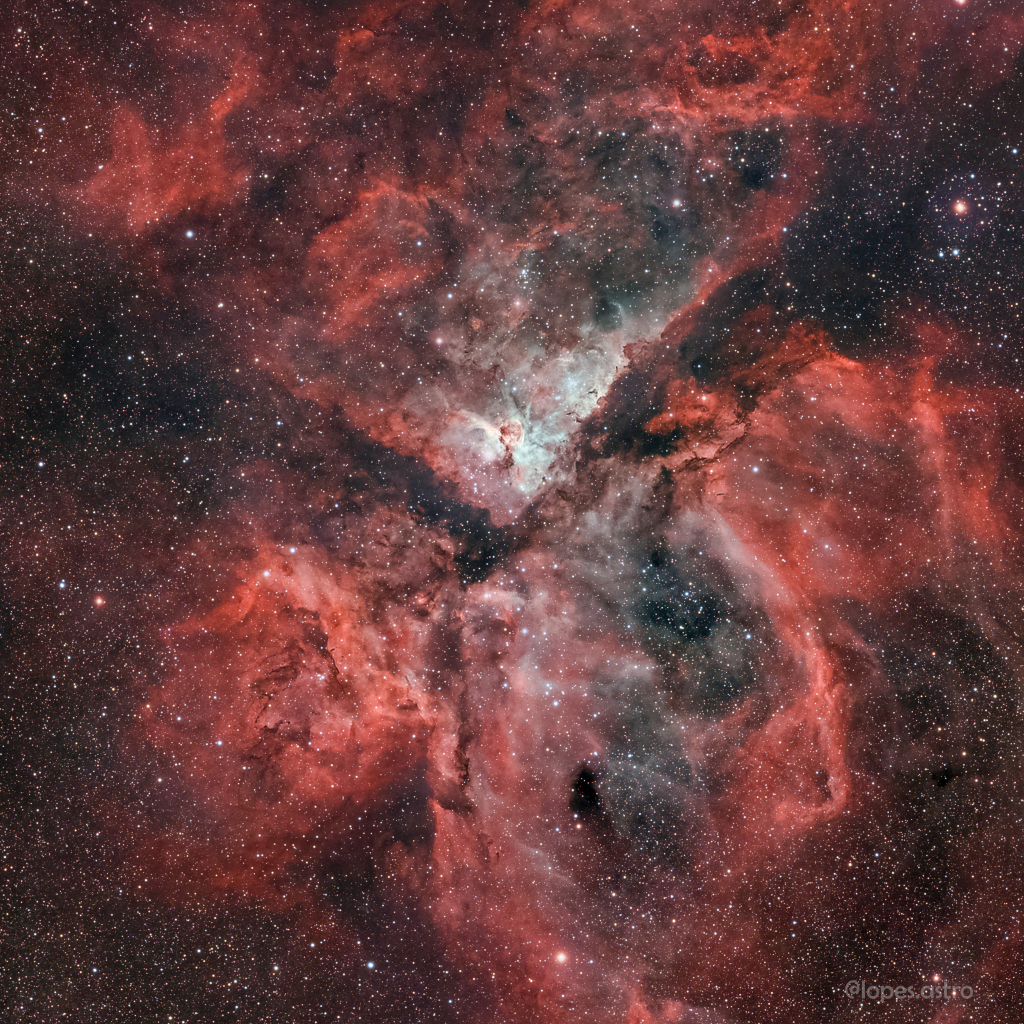
The first time I caught a glimpse of the astronomical imagery in the Mass Effect video games, I was blown away by how realistic everything looked. While the plot of the games is solidly science fiction, the setting has an impressive level of realism. You can explore nebulae and star systems, collect data about exoplanets… and so much of the imagery looks like something straight from a NASA press release. Compare the fictional “Kite’s Nest” from the game (above) to Hubble’s shot of the Carina Nebula (below). Some of the astronomical objects featured in the game are even real ones! I began to suspect that the game’s developers may have had some serious NASA-based inspiration.

Hubble Captures Spectacular "Landscape" in the Carina Nebula
The Carina Nebula, captured by the Hubble Space Telescope
Image Credit: NASA, ESA, and M. Livio and the Hubble 20th Anniversary Team (STScI)

Increasingly curious about the astronomy within the Mass Effect universe, I contacted BioWare and had my questions answered by the series’ Executive Producer, Casey Hudson.
Read more »

WordPress Themes